We are a group of patients, carers, doctors, and scientists who are all interested in patients with rare inherited anaemia.

Our Mission

  1. We want patients with rare inherited anaemias to be able to meet each other (virtually or in reality) and help and support each other. Find us on Facebook
  2. We want to give out reliable information about rare inherited anaemias and get your questions answered by doctors in the field. Ask us a question about one of these conditions on Facebook or by email, and we’ll answer it.
  3. We want to raise money to fund research so we can better understand these conditions and improve the diagnosis and treatments available. Help us fundraise – contact info@togetherwecan.uk.

Why you're here

Have you or your child been diagnosed with a rare inherited anaemia? You can read more about:

  • Diamond-Blackfan Anaemia (DBA)
  • CDA
  • Sideroblastic anaemia (CSA)
  • Red cell membrane disorders (eg. Hereditary spherocytosis, hereditary elliptocytosis, pyropoikilocytosis)
  • Red cell enzyme disorders (eg. pyruvate kinase deficiency, G6PD deficiency)

Are you or your child receiving blood transfusions regularly but you have been told it has not been possible to make a diagnosis about the condition?
Are you worried you or your child might have a rare inherited anaemia but you have not had any tests yet from blood specialists?
Please contact us on info@togetherwecan.uk for help

Stories

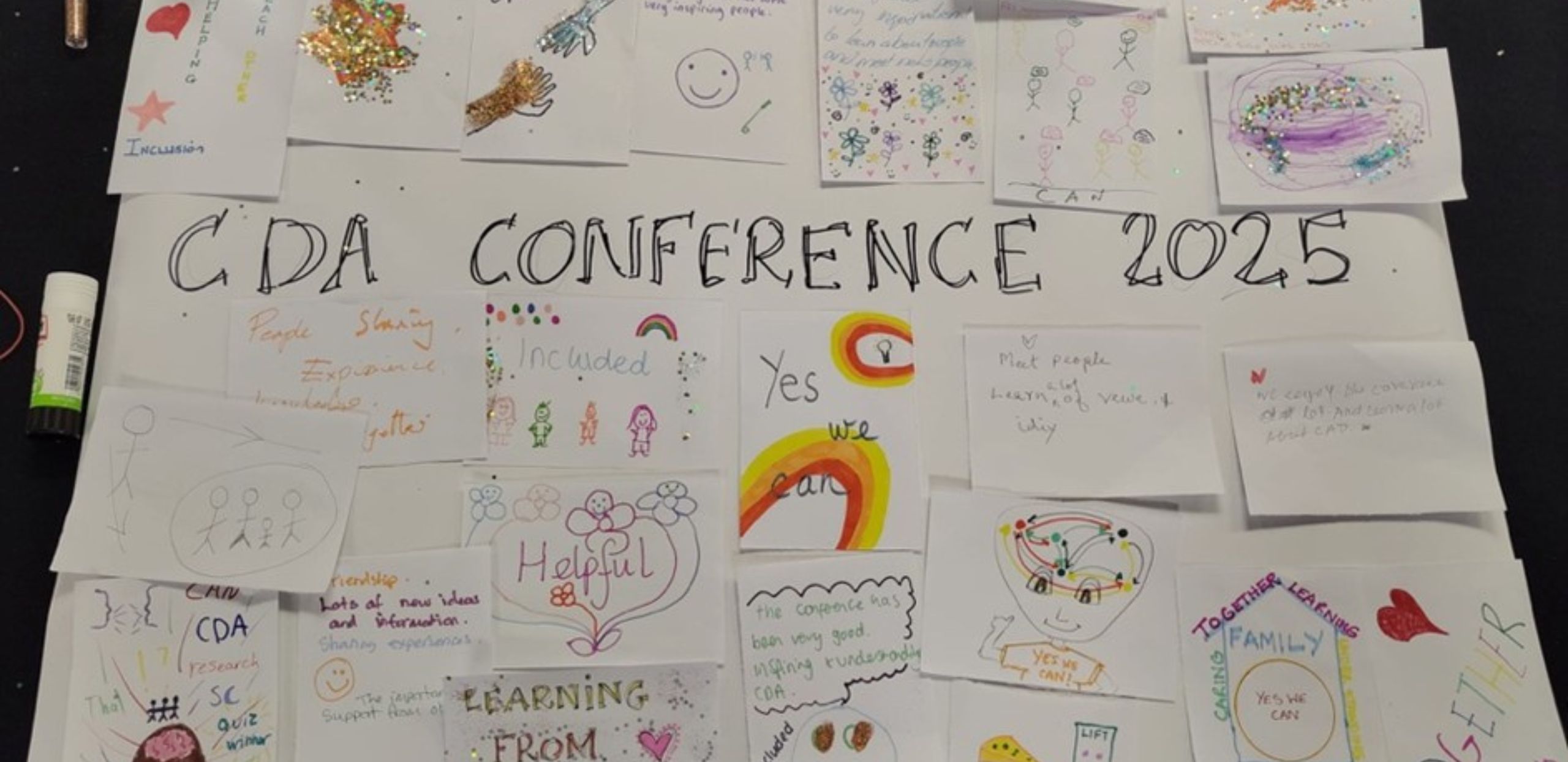
white paper with notes from CDA conference on it

2025 CDA-1 conference: our round-up

We provide a round-up of discussions, presentations, guest conversations and key takeaways from CAN's Congenital Dyserythropoietic Anaemia, Type 1 (CDA-1) conference held in Leeds, 7-9 November 2025.
image shows CAN pull-up banner next to a table with a laptop on it

CAN attends Red Cell Network event

Thank you to the South West Haemoglobinathy Coordinating Centre for welcoming CAN to its first Thalassaemia and Rare Inherited Anaemia in-person patient event in Bristol. This was organised and hosted in collaboration with the Red Cell Network.

CAN represented at haematology event

Emma Buysman, CAN supporter and parent of Lucas, who has  Pyruvate Kinase Deficiency was invited to represent CAN at the British Society of Haematology Annual Scientific Meeting, a conference for those from the world of blood specialists and those who provide support.
Red box with a graphic that says research and the words next to it which say 'would you like to contribute to a new research project'.

Can you contribute to new research?

CAN Trustee and Learning Disability Nurse, Funmi, plans to research how cognitive difficulties may impact the lives of people living with Sickle Cell and is looking for supporters to talk to to help support with this research project.

CDA patients gather at first conference

Between 5 and 7 May while the rest of the country - not to say the world - was focused on the coronation of the new King, a small band of us gathered in a hotel in Leeds for what we believe is probably the world’s first CDA patient conference.
Sanja standing in front of a sign with Japanese writing on

CDA-1 research takes global stage

Scientific research is essential in promoting our understanding of rare diseases and for developing novel and life-changing therapies. CAN is funding Dr Brolih's work using a variety of biochemical and biophysical techniques to characterise CDIN1, the disease protein of CDA-1.
Image shows front entrance of Manchester Hospital Children's unit

Having a blood transfusion: video insight

We share a video insight into what is involved when you go to hospital for a blood transfusion. It was made by a young person who has beta-thalassemia major and who attends Royal Manchester Children's Hospital for his transfusions.
Lucas and his mum wearing 'super rater' tshirts standing in front of a field

Lucas and Robi raise more than £2,000

A big thank-you to teens Robi and Lucas who raised more than a whopping £2,000 to help CAN continue our work. Both boys have rare anaemia diseases that make them more tired so to participate in long walks is really admirable and CAN is so grateful to them both.

Lucas raises more than £2k for CAN

Lucas has Pyruvate Kinase Deficiency and this year in honour of Rare Disease Day, he not only raised an incredible £2,000 for our small charity by hosting a 'Star Blood' walk but he also raised awareness of rare diseases.
Headshot of John

Meet John

John was born in Nigeria but has called Oxford home for more than a decade. He has learned to transform the lifelong pain of living with Sickle Cell Disorder into creative power. He shares more about his published poetry with us.
A picture of Olabike, who has sickle cell disease, smiling

Meet Olabike

Year 12 student Tilly speaks with community pharmacist, Olabike, who has sickle cell disease (SCD) which means Olabike's red blood cells cannot carry as much oxygen and can cause blockages in small blood vessels, resulting in a sickle cell crisis.

Meet Robi

Robi was diagnosed with Congenital Dyserythropoietic Anaemia type 1 (CDA-1) as a young baby. People with CDA-1 make red blood cells more slowly than normal in the bone marrow and break them down faster than normal in the blood vessels.

Information Leaflets

CDA-1 Information Sheet

Read more about congenital dyserythropoietic anaemia type 1 (CDA-1).

G6PD Deficiency Information Sheet

Read more about G6PD Deficiency in our information sheet.

HbH information sheet

Read more about Haemaglobin H disease in our information sheet.

Hereditary Sperocytosis information sheet

Read more about Hereditary Sperocytosis in our information sheet.

HPP information sheet

Read more about Hereditary Pyropoikilocytosis in our information sheet.

Hydroxycarbamide Pathway

Find out more about the Hydroxycarbamide pathway in our information sheet.

PKD information sheet

Read more about Pyruvate Kinase Deficiency in our information sheet.

Sickle cell carrier & having a baby leaflet

Read more about being a sickle cell carrier and potential pregnancy.

Starting uni with Sickle Cell Disease

We offer hints and tips on starting university if you have SCD

Thalassemia Intermedia Information

Read more about Thalassemia Intermedia in our information sheet.

Transfusion Pathway

Read more about this Pathway for people living with Sickle Cell Disorder.